Curating knowledge
How to get employees excited about internal training
When training follows a top-down model (L&D creates, employees consume), engagement stays limited. But when knowledge moves freely and everyone can contribute, training becomes relevant by default.

Ryan Macpherson

Editor:
Stephanie Chan
Most training still feels like something done to employees.
A training program gets rolled out. Training sessions get scheduled. People are told to attend training, then reminded again when attendance dips. That’s when leaders start searching for how to get employees excited about training.
The bigger issue is engagement, not effort. Gallup reports global employee engagement fell to 21% in 2024. Most employees are not engaged at work, so it’s not surprising that participation in training can feel like a hard sell.
Excitement comes from ownership. When training is relevant, timed to real challenges, and shaped by employees, motivation shifts fast.
In this article, we cover:
Why employees resist training
Six ways to drive employee training engagement
What works better than incentives
The ownership shift that gets employees excited about training
Why employees resist training
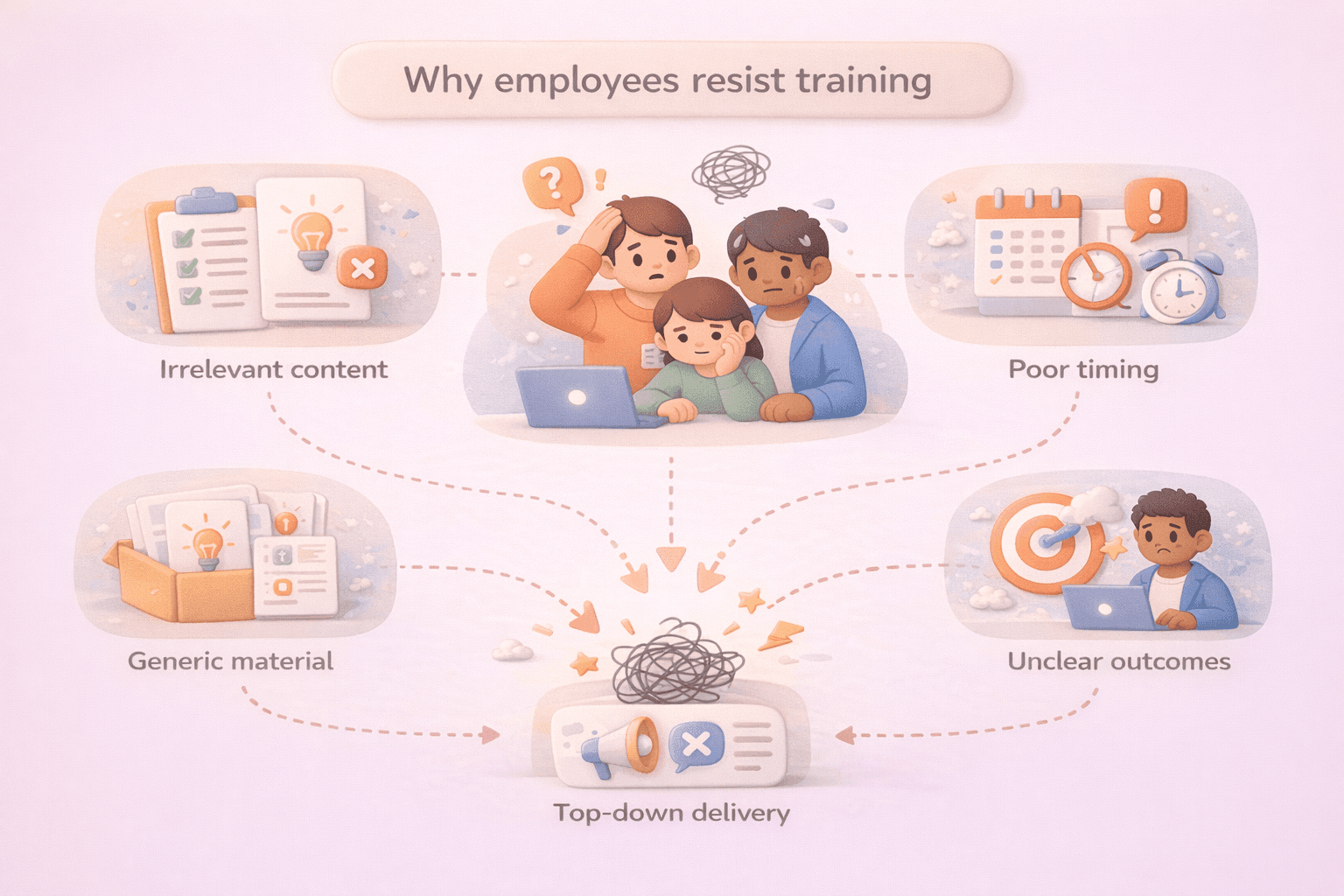
Resistance usually gets framed as a motivation issue. In reality, it’s a design issue.
Most employees want to learn and develop new skills. What they push back on is training that feels disconnected from their job or impossible to fit into the day. When training sessions compete with real work, engagement drops fast.
Common reasons employees resist training include:
Irrelevant training content that doesn’t reflect real challenges
Poor timing, with training added on top of existing work schedules
Generic training materials reused across teams
Unclear outcomes, where skills gaps aren’t clearly identified
Top-down delivery, where employees are told to attend training without input
When these barriers stack up, even the best training struggles. Attendance becomes forced. Motivation fades. Learning stays surface-level.
That’s why the goal is to rethink how training gets created and who owns it.
6 strategies to get employees genuinely excited about training
Getting employees excited about training doesn’t come from better reminders or bigger incentives. It comes from making training feel useful, relevant, and connected to real progress at work.
When employees see training as something that helps them grow, perform better, and move forward in their job, engagement changes.
The strategies below focus on ownership, relevance, and clarity, because that’s what actually drives employee training engagement over time.
1. Connect training to career growth and advancement
Employees are far more motivated to attend training when they can see a clear link between learning and their future.
Training tied to personal development feels purposeful. Training tied to advancement feels urgent. Without that connection, training programs often feel optional or disconnected from real outcomes.
Ways to make this visible:
Link training courses to role expectations and next-level responsibilities
Use training to help employees identify skills gaps
Share success stories of employees who developed new skills through training
Reference learning progress in performance and development conversations
For example, a customer support agent who completes product training and troubleshooting courses may become eligible for a senior support role or team lead position. The training signals readiness for higher responsibility, not just completion.
When training supports growth and not just compliance, employees are more likely to stay motivated and engaged.
2. Make training genuinely relevant to their roles
Relevance is the fastest way to get employees excited about training.
Most employees disengage when training feels generic. A one-size-fits-all training program rarely reflects real jobs, real challenges, or real priorities. When people can’t see how training applies to their day-to-day work, motivation drops and attendance follows.
To make training relevant:
Ask employees what slows them down before creating training content
Build role-specific training courses instead of broad, company-wide sessions
Use real examples from your business, not generic scenarios
Design training around actual challenges teams face
For instance, a sales team struggling with inconsistent discovery calls can create a short training course using real call notes and objections. The course walks through how top performers qualify leads, ask better questions, and handle early pushback. Instead of abstract sales theory, the training addresses a problem the team is actively dealing with.
Relevant training shows respect for employees’ time. It helps them develop skills they can use immediately.
3. Make training accessible and easy to complete
If training feels hard to access, it won’t get done.
Long courses, complex platforms, and rigid schedules make training feel like extra work. Most employees will deprioritize learning when it clashes with deadlines or requires navigating unfamiliar systems.
The fix is simplicity.
Ways to make training easier to complete:
Break training into shorter sessions that fit into busy work schedules
Offer on demand content employees can access when they need it
Keep training materials focused on one clear goal at a time
Remove unnecessary steps to access training
For example, requiring employees to log into a separate system, complete profile setup, and navigate multiple menus just to start a short training course adds unnecessary friction. Removing extra logins and allowing employees to access training with a single link makes it far more likely they’ll actually begin and finish the training.
When training is easy to start and easy to finish, participation improves. Employees are more willing to attend training when learning feels manageable and respects their time.
4. Embed training in daily workflow (not separate platforms)
Training breaks down when it pulls employees away from their work.
Logging into a separate learning management system, navigating unfamiliar dashboards, or waiting for access creates friction. Most employees disengage before learning even begins.
Training works best when it fits naturally into the day.
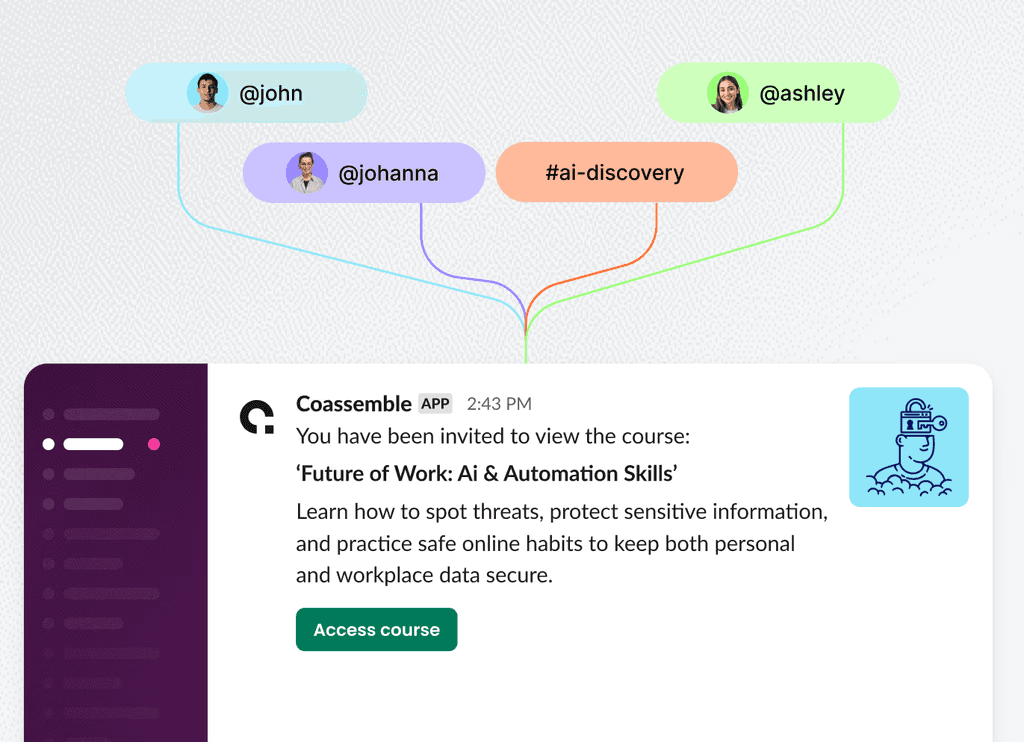
Coassemble is a knowledge transfer platform that lets teams turn existing PDFs, Word docs, slide decks, and internal know-how into structured, shareable training. Anyone on the team can create courses quickly, without design skills or long setup.
Courses can be shared directly in Slack, right alongside everyday conversations. A manager can drop a link after a process update. A team lead can share training during a handoff. Learning shows up where work already happens.
Coassemble also connects to existing learning management systems, so teams can power their LMS with faster, more flexible training creation instead of replacing it. Training stays visible, timely, and part of the daily workflow.
5. Remove barriers by protecting training time
Even relevant training fails if employees don’t have time to engage with it.
When training is treated as optional or squeezed in “when things slow down,” it gets deprioritized. Most employees won’t stay motivated if learning always competes with urgent work.
Protecting training time sends a clear signal: learning is part of the job, not extra credit.
Ways to remove time barriers:
Block training time on calendars like any other priority
Adjust deadlines during major training initiatives
Make it explicit that training time is real work
Give employees permission to decline other requests during learning time
When employees know training time is respected, attendance improves.
6. Celebrate knowledge sharing, not just completion
The strongest employee training engagement comes from knowledge sharing, not box-ticking. When employees are recognized for contributing expertise, training becomes something people want to be part of.
Ways to celebrate knowledge sharing:
Highlight employees who create useful training content
Share success stories in team meetings
Track impact, like faster onboarding or fewer repeated questions
Include knowledge sharing in performance conversations
This shifts the culture. Training stops being something employees attend and starts becoming something they help build. Motivation grows because people see their expertise valued and their work making a difference.
What works better than traditional incentives
Advice on motivating employees to attend training often sounds the same: add food, offer prizes and turn training into a game.
These tactics have a place. They just aren’t the core solution.
Traditional incentives have clear limits:
Food gets people in the room, but it doesn’t create lasting engagement
Prizes can work for compliance training, but they don’t drive skill development
Gamification can increase participation, but it can’t fix irrelevant training content
Once the reward disappears, motivation fades. The training experience hasn’t changed.
What creates genuine excitement runs deeper. Employees engage when training supports:
Autonomy - control over what they learn and when
Mastery - building training showcases their expertise and growth
Purpose - solving real problems for their team
Recognition - being known as someone who shares valuable knowledge
This is where ownership matters.
By making training creation accessible, Coassemble enables all of these drivers. Employees and team leads can create relevant training from real work, share it easily, and get recognized for the impact. Training stops being something people are rewarded for attending and starts becoming something they’re motivated to contribute to.
The next level: when employees create training themselves
The strategies above help. They improve attendance and drive engagement.
But the biggest shift happens when employees stop being passive participants and start creating training themselves.
When employees can create training:
Content stays closely tied to real work
Training responds faster to new challenges
Participation feels voluntary, not forced
Motivation becomes intrinsic
Creation doesn’t need to be complex.
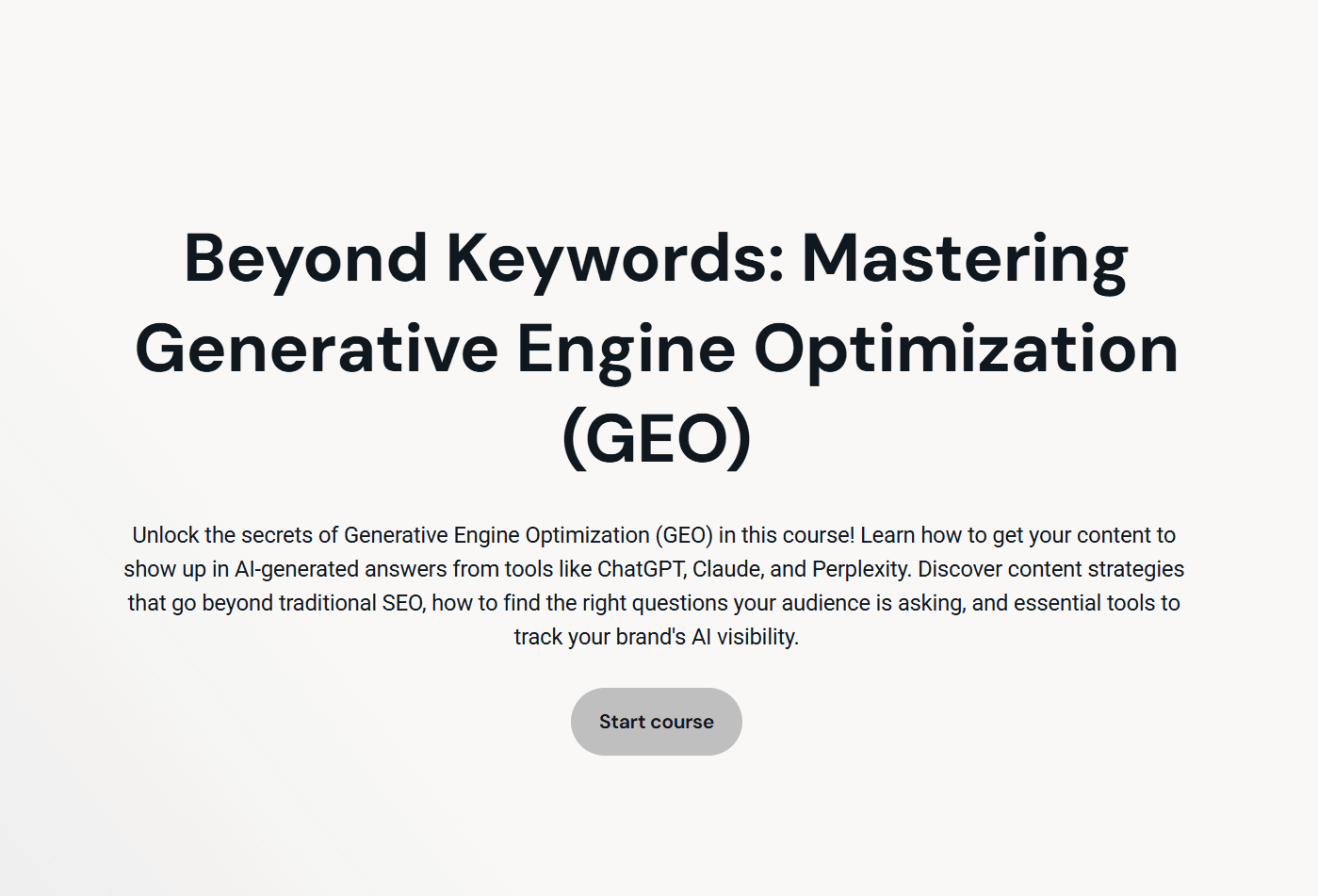
For example, a marketing team used Coassemble to turn internal GEO research into this interactive course on Mastering Generative Engine Optimization. What started as a PDF became structured learning with quizzes and real application examples, created by the expert who actually does the work, not a separate L&D team.
Coassemble’s free plan makes this accessible to any team:
Unlimited course creation
All AI tools included
Unlimited learner views
If your team already has the knowledge, there’s nothing stopping it from moving. Coassemble makes it possible to start sharing what people know today, and build training momentum from there.
Wrapping up
Getting employees excited about training isn’t about better incentives or more engaging slideware.
It’s about a shift in ownership.
When training follows a top-down model (L&D creates, employees consume), engagement stays limited. But when knowledge moves freely and everyone can contribute, training becomes relevant by default.
When employees can quickly turn their expertise into training, team leaders can solve problems without waiting, and the gap between knowing something and sharing it disappears. That’s when training becomes something people actually want to do.
Coassemble makes this shift practical. It’s free to start, easy enough for anyone to use, and powerful enough to create professional training. Teams can begin creating and sharing knowledge today, without procurement delays, credit cards, or waiting for L&D capacity.
Your organization already has the knowledge. The opportunity is to let it move.
FAQs about how to get employees excited about training
How to get employees interested in training?
Shift the focus from attendance to ownership. Employees are more interested when training helps solve real problems and build useful skills. Coassemble makes this practical by letting anyone turn existing knowledge into professional training, so learning is created with employees, not just assigned to them.
How to make training more exciting?
Make it relevant and practical. Shorter sessions, role-specific content, and real examples from the job matter more than games or prizes. Training feels exciting when it clearly improves performance and confidence.
How to get employees to attend training?
Remove friction. Protect training time, fit learning into daily workflows, and make access simple. Employees are far more likely to attend when training respects their schedules and feels like part of the job.
What motivates employees to complete training?
Progress and purpose. Employees stay motivated when training builds new skills, supports personal development, and contributes to team success. Recognition for learning and knowledge sharing reinforces that momentum.
Read More

Join the knowledge revolution today
Unlock knowledge. Boost engagement. Drive results
No credit card required

Join the knowledge revolution today
Unlock knowledge. Boost engagement. Drive results
No credit card required
Join the knowledge revolution today
Unlock knowledge. Boost engagement. Drive results
No credit card required